
A Quarterly of International Business & Geopolitics
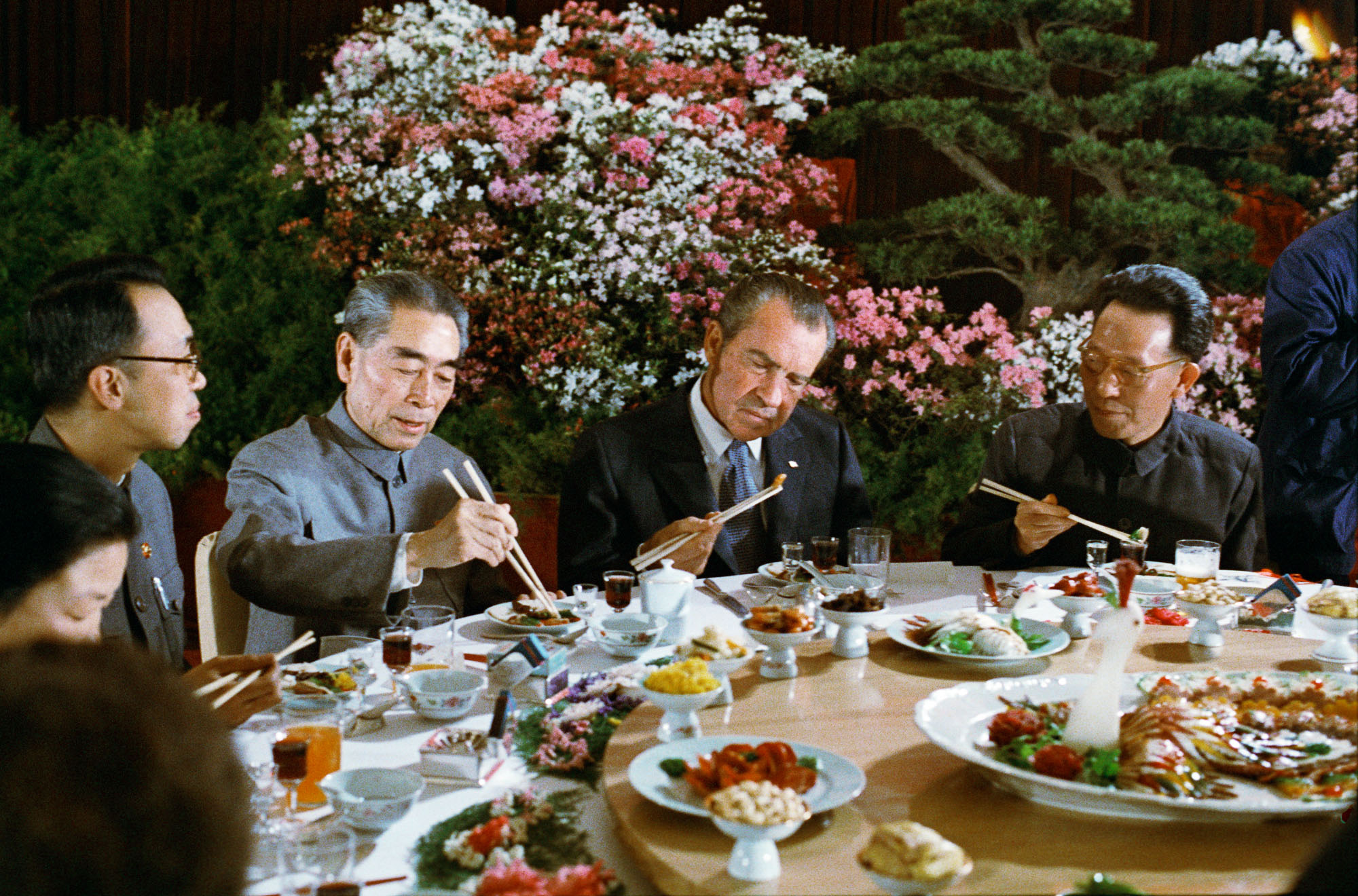
American-Chinese relations are past the point of presidents practicing with chopsticks. It is not too late to create a new status quo.
Thucydides warned that “it was the rise of Athens and the fear that this instilled in Sparta that made war inevitable.” The looming catastrophe unavoidable, the Thucydides Trap has found a comfortable place in geopolitical thought to describe the rising pressure that the People’s Republic of China is placing on the United States. China is Athens; America is Sparta; Taiwan is floating in the Aegean. In this telling, the characters assigned to their historical roles appear to write the ending itself.
A gross oversimplification. Athens and Sparta were not sharing supply chains nor holding stakes in each other's companies. No Spartan merchants were waiting for Athenian customs officials to clear their containers. There was no Athenian-Spartan business council. The signs of Chinese growth were ever apparent too, and yet American officials seemed to be eager to engage strategically: Nixon’s famous 1972 visit, their recognition of the PRC as the sole legitimate government of China only seven years later, the designation of the PRC as Most Favored Nation. Throughout China's growing integration into global trade, its commercial importance grew enourmously, and the war dogs may bark all they want; it still is.
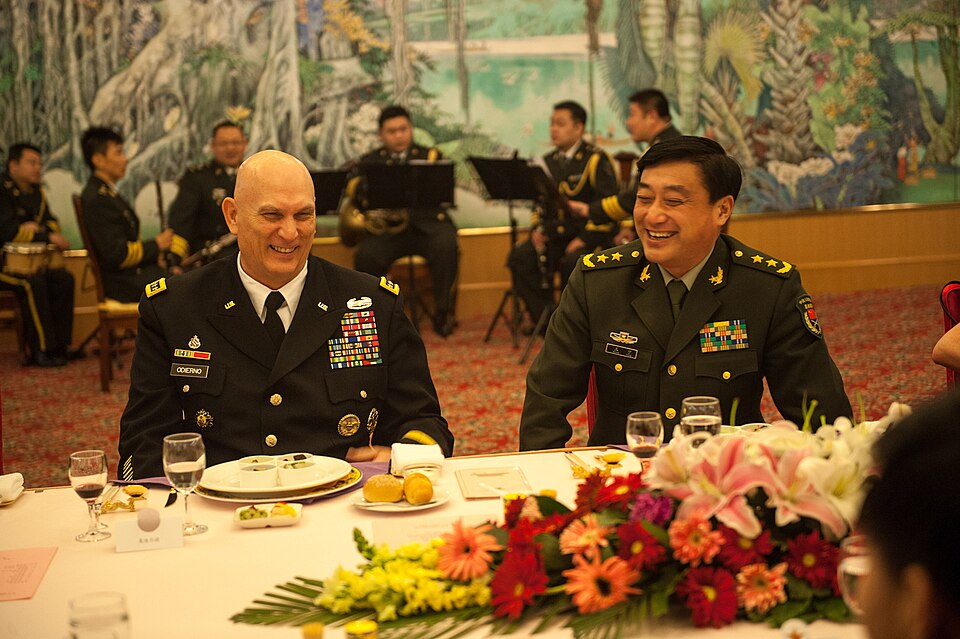
There is still credit to Thucydides; the rivalry between these two colossi is undeniably real. The 2010s saw mounting American alarm over China's growing assertiveness in the South China Sea and increasingly prominent allegations of state-sponsored economic espionage. Washington appeared less offended by the instruments of power themselves than by Beijing's growing ability to wield them; in a way, it saw a younger classmate grow up and start wearing the same dresses to the party, taking great offense at their perceived fashion faux pas. What emerged was the Sino-American relationship of the 21st century we are reminded of so often by today’s media, one of deeply incompatible institutional values and an increasingly open struggle for international dominance. Best not to forget that the reliance on Chinese business never disappeared, and the finger-wagging did not dissuade markets from increasing bilateral goods trade by more than $200 billion between 2010 and 2018. Whatever Trump's personal motivations, the economic confrontation he initiated would prove considerably more durable than his administration. Trump’s trade war is very real; what began as confrontation developed into a durable American policy consensus.
For roughly half a century, Washington and Beijing could maintain fundamentally different politics and still increase their economic integration. The question is no longer how to restore the relationship that existed before Xi Jinping and Donald Trump, the trade wars, COVID-19, and renewed tensions over Taiwan. That relationship is gone. We must now ask what replaces it.
Today, it is easy to regard competition between the two giants as almost inevitable. The past was a bit more complicated than that. It was not the mutual ethos of liberalism that sustained their engagement, nor was it a mutual cultural affection. It was, instead, a shared usefulness. While China gained markets, technology, expertise, and access to the global financial system, the US received inexpensive manufactured goods, enormous production capacity, corporate margins, and an ever-growing, hungry Chinese market. Thus was the arrangement: business became the stabiliser, the constituency that demanded a healthy relationship. Companies readily lobbied Washington for increased cooperation with the Chinese market. Economic interdependence.
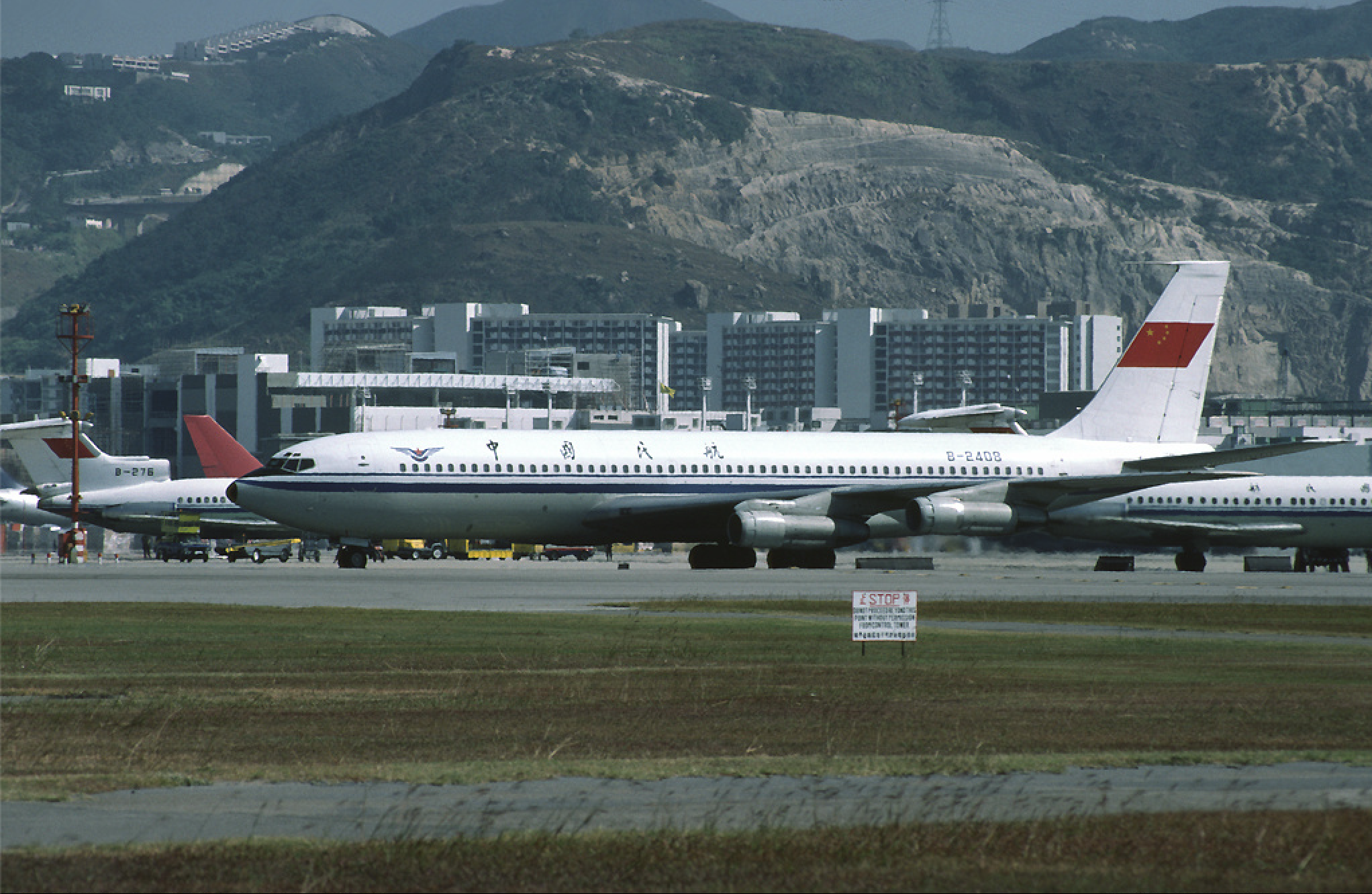
For decades, titans of American industry demanded Washington preserve this increasingly lucrative relationship. Following Nixon’s arrived aboard a 707; later that year, China put in their first order for Boeing jets later that year. General Motors' Chinese joint venture, SAIC-GM, was created in 1997 and has been pumping out over ten million Buicks since 1998, operating factories, employing laborers. Goldman Sachs opened offices in Beijing and Shanghai in 1994, having already managed a $250 million Chinese bond offering the previous year. Famously, Apple remains dependent on Chinese manufacturing and assembly, even as its processors, displays and other components originate across an international network of suppliers. On the flip side, in 2018, almost one-fifth of China's merchandise exports were destined for the United States. These, and hundreds of other companies, had good reason to tell Washington to not blow this up.
These deals, of course, did not destroy geopolitics. Washington still featured longstanding ideological distrust of Chinese Communist Party rule, and Beijing did not inherently trust America as a brother. But the political price of decisions rose with their dependence, where the stakes of a political decision now carried with it massive economic consequences. The error in Washington was assuming that economic integration would eventually lead China toward political liberalization. Our error now may be that, because political convergence failed, interdependence no longer matters.
Where are we now? Now, still nursing the wounds of trade wars, with mounting anti-China sentiment and Beijing's growing resistance to American cultural and economic imperialism. Washington increasingly regards China's economic and technological rise as a national-security challenge, born from military modernization and control of strategic supply chains, industrial policy and state-owned enterprises and state-supported industrial champions, and rapid technology innovation. Beijing sees America as a bullying hegemony, trying to contain China's technological and economic development with their alliances and investment restrictions, all to prevent China's emergence as a strategic peer.
And the world has indeed changed. The advanced chip powering an AI data centre is no longer just a semiconductor. The world’s ports aren’t just ports, TikTok isn’t just an app, and a battery plant is no longer a battery plant. Modern industry is held together through cloud infrastructure, AI chips, telecommunications infrastructure, and rare earth processing, of which China dominates. These now exist as both commercial assets and instruments of strategic leverage that transcend the simplicity of industry. Once governments begin regarding economic capacity as an extension of military capacity, the distinction between trade policy and security policy becomes increasingly difficult to draw. Businesses get caught in the middle. Nvidia recently disclosed that American export restrictions contributed to $4.5 billion associated with excess inventory and purchase obligations. Both the U.S. and China's restrictions limited the company's ability to sell.

Corporate must now answer questions that were previously foreign-ministry decisions. Geopolitics has merged export licenses and market access, sanctions and shareholders, supply-chains and labor rights. But these are the new rules of the game, and the ambition of comprehensive economic decoupling, raised by growing American feeling of economic independence and isolationism, is expensive and difficult to achieve. A complete economic divorce between the United States and China would be extraordinarily costly, an enforcement headache; in some sectors, supply chains route through third countries. Decoupling is less complete and more complicated than bilateral trade statistics suggest. More importantly, “decoupling” doesn’t answer the strategic question. Decouple what? Christmas decorations? Pharmaceuticals? Machine tools, advanced GPUs, T-shirts?
The problem with treating China as a single economic object is that national security concerns are not the same in every sector. Washington has already experimented with this principle under its "small yard, high fence" doctrine, though its implementation has proven more contentious than the slogan suggests. Inside it, place what you need, and identify the threats of today, whether that be sensitive military and dual-use technology, critical infrastructure exposing essential systems, and advanced AI accelerators and semiconductor-manufacturing equipment – fair game. Outside it, ordinary commerce should be permitted, and encouraged, to stay boring. Make America great again? Make trade boring again. The over-securitization that we see today is creating its own instability; a CSIS analysis finds that American export controls have accelerated China's efforts to develop alternatives. If Beijing concludes that American restrictions are intended to prevent its technological ascent indefinitely, it has every incentive to accelerate its pursuit of domestic alternatives. And when Washington interprets the pursuit of self-sufficiency as further evidence of hostile intent, the positive feedback loop creates an ever-growing insecurity.
To restore predictability in the Sino-American commercial relationship, we need mechanisms. The first priority is to define the economic security perimeter. Washington needs to become explicit about what is unacceptable to transfer – which technologies pose demonstrable national-security risks when transferred – and equally understand that everything outside of that perimeter is not presumptively hostile. This process is possible, and was attempted in Biden's presidency. Indiscriminate national-security restrictions do not necessarily conflict with legitimate commercial regulation. But the rules must be clearer, with periodic review, and a genuine reciprocal communication. A narrow, consistently enforced perimeter is more defensible than an endlessly expanding one.
Institutionalize economic crisis management. When military crises erupt, we have military hotlines. If Washington and Beijing can coordinate during banking crises, why shouldn't the same principle extend to export controls, investment restrictions and economic retaliation? Imagine a standing bilateral mechanism for emergency consultation on export controls, sanctions and investment restrictions. Two nuclear powers whose economies remain deeply entangled should not discover one another’s economic red lines through press releases.
Preserve the constituencies that benefit from peace. The economic relationships of the past created political constituencies, and we shouldn’t pretend that they guarantee peace. But deliberately destroying every commercial relationship between two rival powers removes people with something to lose from it. Apple won’t prevent a war over Taiwan – but a world in which millions of Americans and Chinese, thousands of companies, and enormous pools of capital have an interest in stability is different. It is one that creates a political incentive to preserve peace.
Everything sounds lovely until Taiwan. Pretending that economic interdependence alone could resolve the situation would be unserious. The current danger isn’t merely that Washington or Beijing or Taipei consciously chooses war. It’s that deterrence, domestic politics, military signaling and misperception reinforce one another until there’s no more room for manoeuvre.

Before even the obvious horrors that war would bring, the economic consequences alone would be destructive on the scale of trillions. Such arrangements would not guarantee peace, but they could make the economic consequences of confrontation more predictable. The most valuable achievement of a new status quo would not be resolving Taiwan. It would help make it possible that a crisis over Taiwan occurred inside a relationship containing enough communication, economic firebreaks, and political predictability to prevent escalation from becoming automatic.
“Thucydides Trap” is seductive for its drama. The leaders become actors; the policymaking, a tragedy. Conflict becomes destiny, and catastrophe becomes a romantic inevitability. Inevitability is dangerous. If Washington assumes war is inevitable, policies that might otherwise appear unnecessarily provocative become justified as preparations for an unavoidable conflict. Both sides hold the power to manufacture the world that their theories predicted.
Nixon’s China policy belonged to another age. There may not be a second opening, and there is little value in pretending that the strategic competition between the United States and China can be wished away over another banquet in Beijing. But neither should the failure of the old relationship be confused with the impossibility of a new one. The next Sino-American status quo may be colder, more suspicious and more heavily defended than the last. It will contain export controls, military competition, industrial policy and recurrent crises. It need not contain war.
Thucydides gave us a warning. Let us not let him give us an excuse.